ServicesFillings
Fillings for Kids in Winchester
A cavity caught early is a small fix. We clean out the soft spot, fill it with tooth-colored material and keep your child comfortable the whole way. You get one person who explains the plan, answers your questions and sets up the visit.
How a filling helps your child's tooth
Food and germs make acid, and over time that acid softens a spot on the tooth. That soft spot will not grow back. Once it breaks through the hard outer enamel, decay spreads faster in the softer layer below. A filling takes out the damaged part and closes up the tooth so your child can chew on it again.
This matters for baby teeth too. Their enamel is thinner than on adult teeth, so even a small cavity can get close to the nerve faster than most parents think. Many back baby teeth hang on until age 10 to 12, holding the spot for adult teeth on the way. Treating a cavity while it is small usually keeps the visit short.
From your first call to the follow-up, the same person on our team works with you. They tell you what we found and what we recommend, explain the reasons and handle the scheduling. You do not have to start over with someone new each time you call.
What your child's filling visit includes
- 01
A look and an X-ray first
We check the tooth and, when needed, take an X-ray to see how deep the cavity goes. Some cavities between teeth only show up this way.
- 02
Tooth-colored material
We use composite, a white resin that bonds to the tooth and matches its color. Kids and parents tend to like that it does not show when your child smiles.
- 03
Gentle numbing
For most fillings we numb the area so your child feels pressure, not pain. We call it sleepy juice or a tooth tickle, words kids understand without getting scared.
- 04
Kid-sized steps
We tell your child what is coming before we do it, one step at a time. Short breaks are fine. A comfortable child makes for a better filling.
- 05
A check of the bite
Before your child leaves, we make sure the filling sits right and the bite feels normal. A high spot can feel odd, so we smooth it down on the spot.
- 06
Clear aftercare in writing
You go home knowing when your child can eat, what to watch for and when we want to see them next.
Questions about Fillings?
Call(781) 350-9369Signs your child may need a filling
Brown, gray or dark spots
A spot on a tooth that was not there before is worth a look. Chalky white patches near the gumline can be early decay too.
Wincing at cold or sweets
If your child pulls back from ice cream or a cold drink on one side, a cavity may be letting temperature reach the inner tooth.
Food getting stuck in one spot
A small hole or rough edge traps food. Kids often point to the same tooth over and over.
Chewing on one side
Kids rarely say a tooth hurts. They just stop using it. Watch for a shift in how your child eats.
A cavity found at a checkup
Often there are no signs at all. That is why regular exams and cleanings catch so many cavities while they are still small.
How the filling appointment goes
- 1
You call and we set it up
One person takes your call, books the appointment and answers questions about your child's needs, worries or past visits. New patients can register on the same call.
- 2
We talk it through first
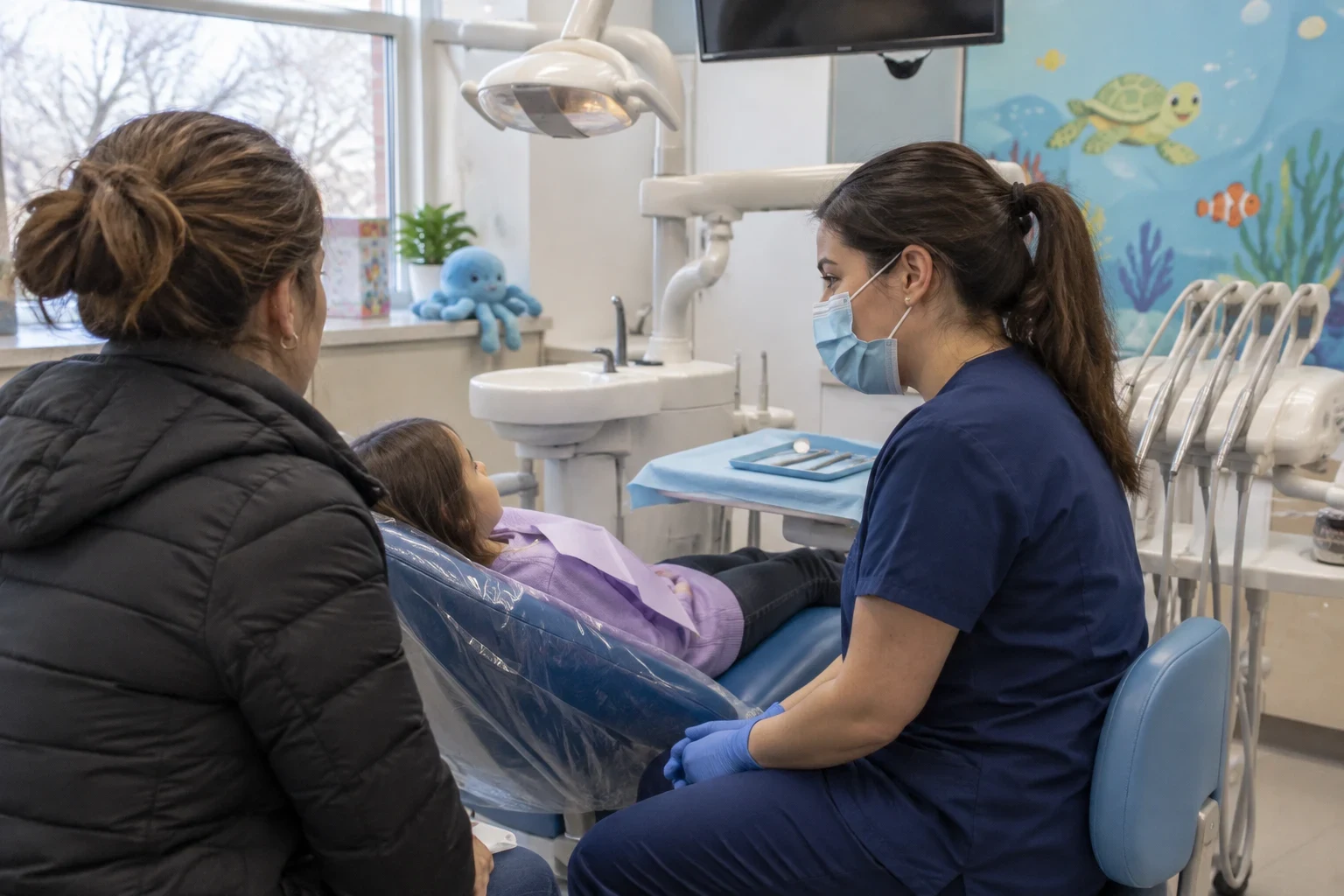
Before anything starts, we show you what we see and explain the plan in plain words. If more than one tooth needs work, we tell you which one comes first and why.
- 3
Numbing and cleaning out the cavity
We numb the tooth, then remove the soft decay. Your child can hold a toy, watch the ceiling or listen to us count.
- 4
Filling and shaping
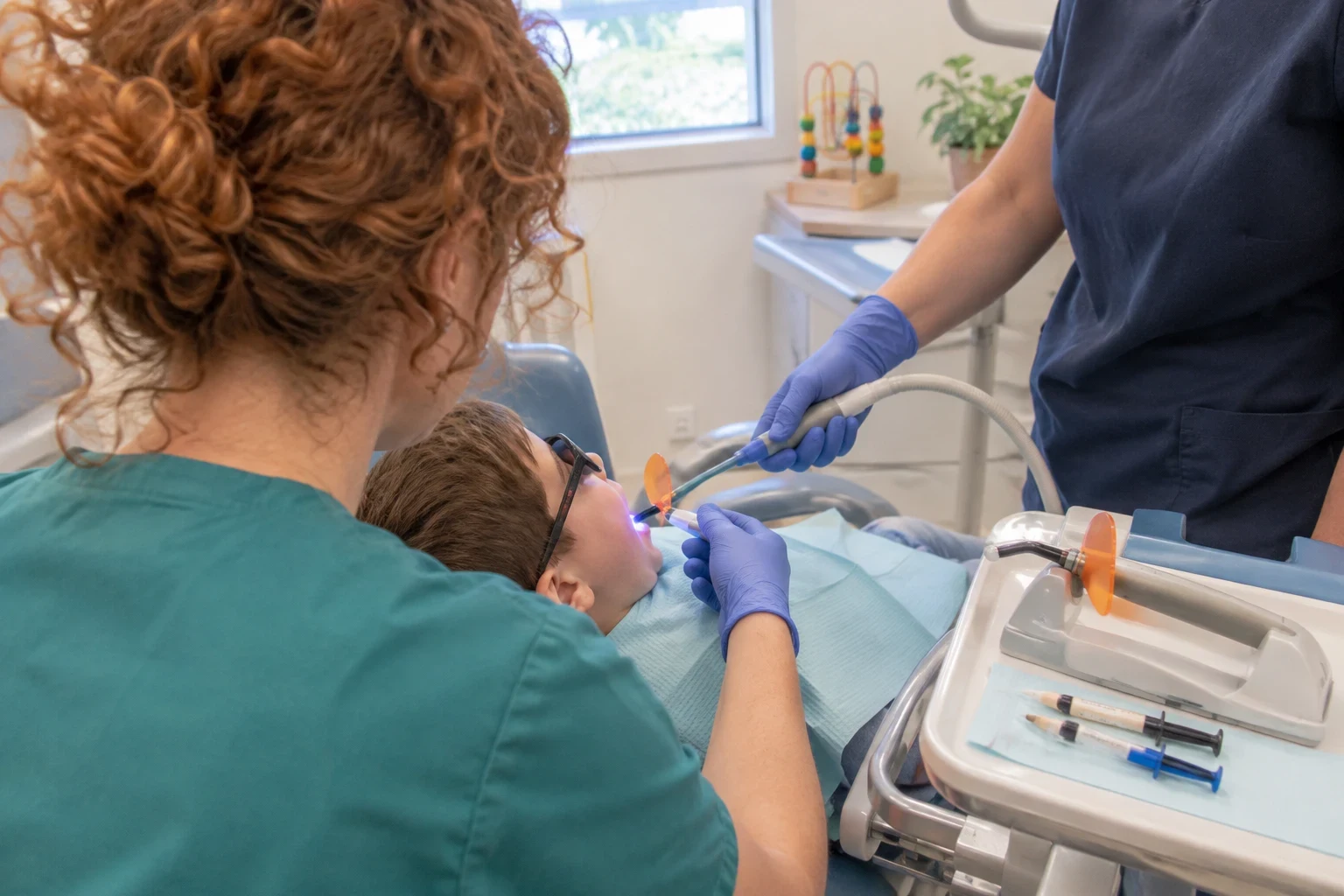
We place the tooth-colored material in layers, harden each layer with a blue light and shape it to fit the bite. Most single fillings take well under an hour.
- 5
Home and follow-up
The numbness wears off in a few hours. Soft foods help until then, and we ask that your child not chew on the numb lip or cheek. The same person you spoke with is there if questions come up later.
What moves the price of a filling
You see the costs line by line before we start, so nothing on the bill catches you off guard. The two biggest drivers are how many teeth need work and how big each cavity has gotten. You can pay with a Visa, MasterCard or Discover card, use most insurance plans, or spread the cost over time with CareCredit Patient Payment Plan.
- How many sides of the tooth
- A tooth has several surfaces. A cavity on one surface takes a smaller filling than one that wraps across two or three.
- How many cavities
- With more than one cavity, we might do them all in a single visit or split them into two. Your child's age and how well they handle the chair guide that call.
- Depth of the decay
- If the decay reaches close to the nerve, a filling may not be enough. We talk through other options, like a pediatric crown, before doing anything more.
- Help staying calm
- Some kids do better with laughing gas or another choice from our sedation dentistry page. That adds to the cost, and you hear about it ahead of the appointment.
- Your insurance plan
- Plans differ on what they pay toward fillings. On the phone, we can walk through what your plan is likely to cover.
Parent questions about fillings
My child's tooth is going to come out someday. Does it still need a filling?
Often, yes. Back baby molars can stay put for years, and a cavity left alone keeps getting bigger until it hurts or gets infected. Baby teeth also hold space for the adult teeth. If one is lost early, the teeth next to it can drift and close up that gap.
Will the filling hurt?
Most kids feel a quick pinch while we numb the tooth, and after that just some pressure. We go slowly and tell your child what is next before we do it. If your child is very anxious, we can talk about sedation options before the visit.
Can I stay with my child during the filling?
Yes, parents are welcome to stay for most visits. Some kids settle down with a parent close by, and others do better without an audience. We can help you decide what fits your child.
What should my child eat after a filling?
Wait to chew until the numbness wears off, which usually takes a few hours. That day, stick with soft foods and cool drinks. The filling is already set hard when your child leaves the office.
How can we stop new cavities from showing up?
Brush twice a day, floss where teeth touch, and go easy on sticky snacks. Sealants protect the grooves on back teeth, and fluoride treatment helps strengthen enamel. We can go over both at your child's next checkup.
Ready to take care of that cavity?
A small filling now saves your child a bigger visit later. Call and one person will set up the appointment and answer your questions along the way.