
ServicesSealants
Sealants for Kids in Winchester
Back molars have deep grooves that a toothbrush can't reach. A sealant fills those grooves with a thin protective coating. No drilling, usually no numbing, and a few minutes per tooth. One person on our team answers your questions and sets up the visit.
What a Sealant Does
Most cavities in kids start on the chewing surfaces of the back teeth. Those surfaces are full of pits and narrow grooves. Food and plaque settle in, and even good brushers miss them. A sealant is a thin plastic coating we paint into those grooves so there is less for germs to hold onto.
The best time is soon after the permanent molars come in. The first set usually shows up around age 6, the second around age 12. Sometimes we also seal a baby molar with very deep grooves. We look at each tooth and tell you plainly whether it needs one.
Parents from Winchester, Woburn and Medford tell us the same thing: they want one person who knows their child's chart. That is how we work. The same contact answers your call, sets up the visit, and follows up after.
What Your Child's Sealant Visit Includes
- A look at every molar
- Each back tooth gets checked before we coat it. Sealants belong on healthy enamel, so we look for early soft spots first.
- Cleaning the grooves
- We polish the chewing surface so the coating grips clean enamel instead of plaque.
- Coating and hardening
- We brush the liquid into the grooves and set it with a small blue light. Each tooth takes only seconds.
- Checking the bite
- Your child closes together on a thin marking paper. If anything sits too high, we smooth it so the bite feels like it did before.
- Follow-up at later checkups
- Over time a sealant can thin or chip. We look at them during each exam and cleaning and fix any spot that needs it.
Signs Your Child Could Use Sealants
New permanent molars
Six-year and twelve-year molars are the teeth sealants were made for. Their enamel is the newest and the easiest for decay to get into.
Deep, dark grooves
Dark lines in the grooves of the back teeth can mean food is packing in. Sometimes it is only stain. We check and tell you which it is.
Past cavities
Kids who have needed fillings tend to get more cavities. Putting sealants on the molars that are still healthy gives those teeth a better chance.
Brushing is a struggle
Some kids rush, some have braces on the way, some just fight the toothbrush. Sealants back up the molars on days when brushing doesn't go well.
Lots of snacks or sweets
Juice, crackers and sticky treats feed cavity germs. Sealed grooves leave those germs fewer places to settle.
What Moves the Price of Sealants
Before anything is done, we go over the cost with you so nothing comes as a surprise. We accept MasterCard, Visa, Discover, most insurance plans and CareCredit Patient Payment Plan. The total mostly depends on the number of teeth we seal and how much your plan picks up.
Number of molars sealed
We charge by the tooth. Sealing just the four first molars runs less than doing all eight back teeth in one visit.
Your plan's rules
Many plans cover sealants on permanent molars. Some stop at a certain age or only pay for specific teeth. Call us before the visit and we can look over your plan together.
A small soft spot
If a groove has an early soft area, it may need a bit of cleanup or a small filling before the coating goes on. We show you the spot and explain your options first.
Touch-ups later on
A sealant that chips or wears thin may need a patch. Most of the time that is a short fix done at a regular checkup.
How the Appointment Goes
- 1
Your call
One person books the visit, answers your questions about how sealants work, and writes down anything we should know about your child. If your child hasn't seen us before, new patient registration happens on that same call.
- 2
Settling in
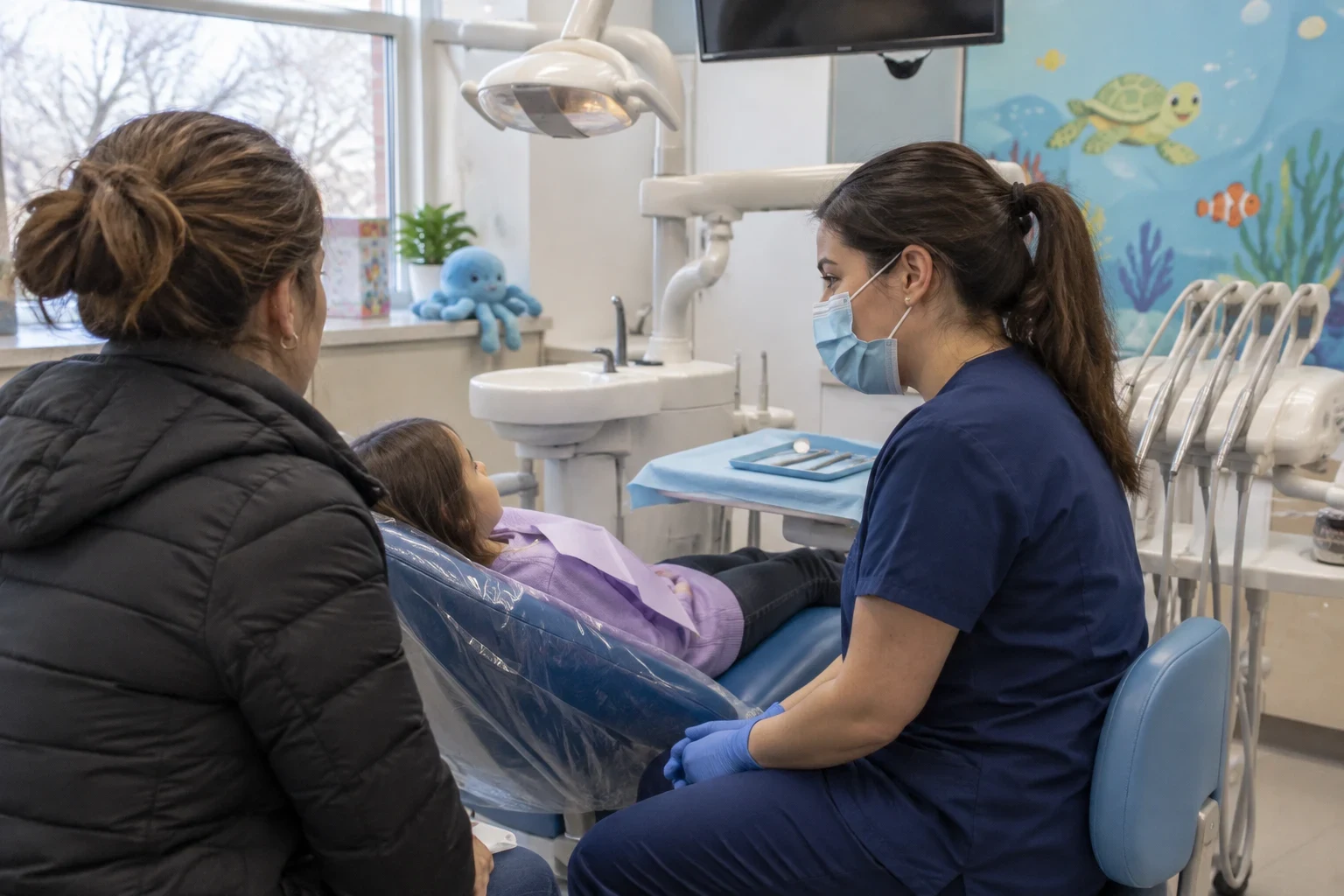
We tell your child what is coming in simple terms and show them the mirror, the air tip and the little light before we use them. Since nothing hurts, most kids stay relaxed the whole time.
- 3
Clean, dry, coat
We clean the tooth, put on a mild conditioner, rinse, and keep the area dry with cotton. Then the sealant goes on and the light hardens it.
- 4
Back to normal right away
Your child can eat and drink as soon as we finish. We tell you which teeth were sealed and when we will look at them again.
Questions Parents Ask About Sealants
Will my child feel any pain?
Almost never. Sealants don't need a drill, and most kids don't need a numbing shot. What kids notice most is holding their mouth open for a few minutes and the tart taste of the conditioner.
How long do sealants last?
Several years in many cases, though chewing slowly wears them. We look at them during every exam and cleaning and patch any spot that has thinned or chipped.
Do sealed teeth still need brushing?
Yes. A sealant only covers the chewing surface of a back tooth. The sides of every tooth and all the front teeth still need brushing and flossing, and fluoride treatment helps protect the whole tooth.
What is a sealant made from?
It is a plastic resin, either clear or tooth-colored. If you want to know more about the material, bring it up on your call and we will tell you what we use and why we chose it.
Can a tooth with a cavity be sealed?
Not if the cavity is real. That tooth gets a filling first. A tiny early spot can sometimes be cleaned and sealed in the same sitting, and we explain that to you before we start.
Can my child get sealants during a cleaning visit?
In many cases, yes. Lots of families add sealants to a regular exam and cleaning so they make one trip, not two. Let us know when you call and we will block out enough time.
Ready to Protect Those New Molars
Tell us your child's age and which teeth are coming in. One person on our team will set up the appointment and stay your contact from start to finish.