ServicesSedation Dentistry
Sedation Dentistry for Kids in Winchester
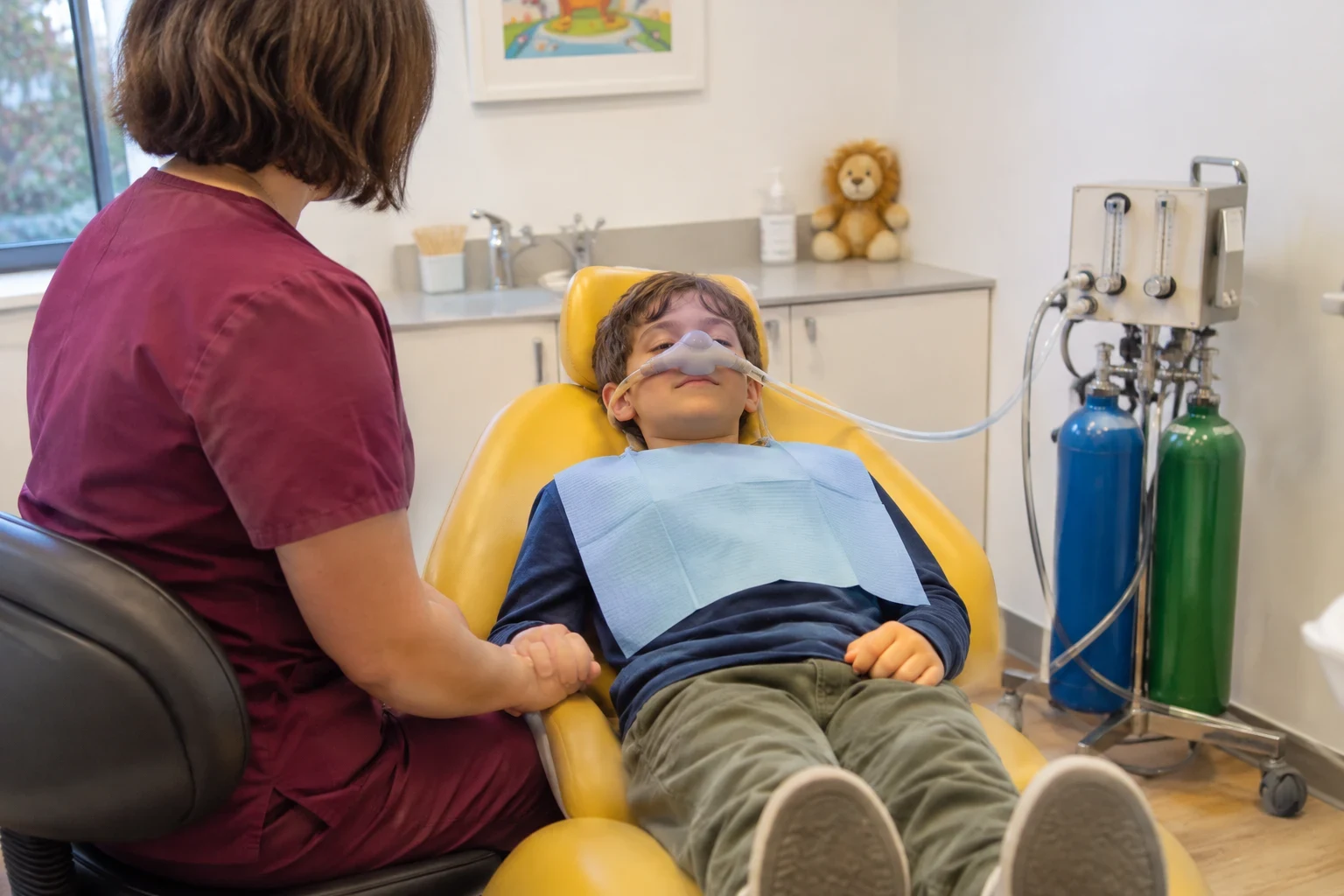
Some kids can't sit still or calm down in the chair, and that's okay. We use sedation so your child stays relaxed while we treat their teeth. One person on our team plans the visit with you and answers your questions start to finish.
When sedation makes sense
Sedation dentistry means using medicine to help your child relax during treatment. It is not for every visit. Most cleanings and small fillings go fine with a gentle approach, a calm room and a little patience.
It becomes the right call when fear, age or the amount of work gets in the way. A three-year-old who needs several fillings, a child with a strong gag reflex, or a kid with special needs who can't stay still may do much better with some help. Getting the work done safely in one calm visit is often easier on your child than three hard ones.
We tell you plainly whether we think your child needs it. If a lighter approach will work, we say so.
What a sedation visit includes
- A planning talk before the day
- We go over your child's health history, any medicines they take and the treatment they need. You hear which sedation option we recommend and why.
- One person to call
- The same team member handles your scheduling, prep questions and follow-up. You don't have to repeat your child's story to a new person each time you phone.
- Written prep instructions
- You get clear rules about eating and drinking before the visit, what to wear and what to bring. We go over them with you by phone too.
- Monitoring during treatment
- Your child's breathing and comfort are watched the whole time they are sedated. We don't rush.
- Wake-up time in our office
- Nobody hurries your child out the door. They stay in a quiet spot with us until they're alert and steady, and we explain what the rest of the day will likely look like.
- A check-in afterward
- We follow up to see how your child is doing and answer anything that came up once you got back.
Signs your child may need sedation
Panic at past visits
Crying, kicking or refusing to open up at earlier appointments can mean the chair itself is the problem. Forcing it can make the next visit worse.
A lot of work needed
Several cavities, fillings or pediatric crowns can take longer than a young child can handle awake. Doing it all at once may mean fewer trips.
Very young age
Toddlers often can't follow directions or sit still long enough for careful work.
Strong gag reflex
Some kids gag the moment anything touches the back of the mouth. Sedation can make treatment possible without the struggle.
Special needs or sensory issues
Bright lights, noise and touch can be too much for some children. A calmer state helps them get through care they need.
How the day goes
- 1
Phone call and planning
You talk with the person who will coordinate your child's care. We set the date, go over health history and send prep instructions.
- 2
Arrival and settling in
Come a little early so your child can get used to the room. We check that the eating and drinking rules were followed and answer last questions.
- 3
Sedation and treatment
We give the sedation and wait until your child is relaxed. Then we do the planned work, whether that's fillings, extractions or other care, while watching them closely.
- 4
Rest and going home
Your child wakes up and rests until ready to leave. Plan on a quiet day with soft foods and an adult nearby.
What affects the cost
The sedation is charged separately from the dental work, so your total depends on both. Before the appointment, we go over the expected charges with you line by line. For payment, Visa, MasterCard and Discover cards all work, we take most insurance plans, and if you'd like to spread payments out, CareCredit Patient Payment Plan is available.
- Type of sedation
- Lighter options cost less than deeper ones. The one we recommend depends on your child's age, health and the work needed.
- Length of treatment
- A longer visit with more work means more time under sedation.
- Work being done
- Fillings, crowns and extractions are each priced separately from the sedation.
- Insurance coverage
- Plans differ a lot on sedation for kids. We help you check what yours covers before the day.
Sedation questions parents ask
Something not covered here? (781) 350-9369
Is sedation safe for young kids?
We only recommend it after reviewing your child's health history and the work they need. Your child is watched closely the whole time and stays with us until they are ready to go. If something in their history worries us, we talk it through with you first.
Can I stay with my child?
Ask us when you call. We'll explain where you can be during each part of the visit so you know ahead of time and can tell your child what to expect.
Does my child really have to skip breakfast?
Yes. Sedation works more safely when the stomach is empty, so food and drink have to stop at the times we give you. Stick to that schedule closely. If your child sneaks a snack or a drink, phone us before you head over and we'll tell you what to do.
How will my child feel afterward?
Most kids are sleepy, a bit wobbly or cranky for a while. Keep the day quiet, offer soft foods and fluids and keep an eye on them. Call us if anything worries you.
Will they remember the treatment?
Many kids remember little or nothing, depending on the sedation used. Even when they do, they usually recall feeling calm rather than scared, which helps future visits like routine exams and cleanings go better.
Let's plan a calm visit for your child
Tell us what happened at past visits and what your child needs. One person will set up the appointment and stay with you through recovery.