ServicesFluoride Treatment
Fluoride Treatment for Kids in Winchester
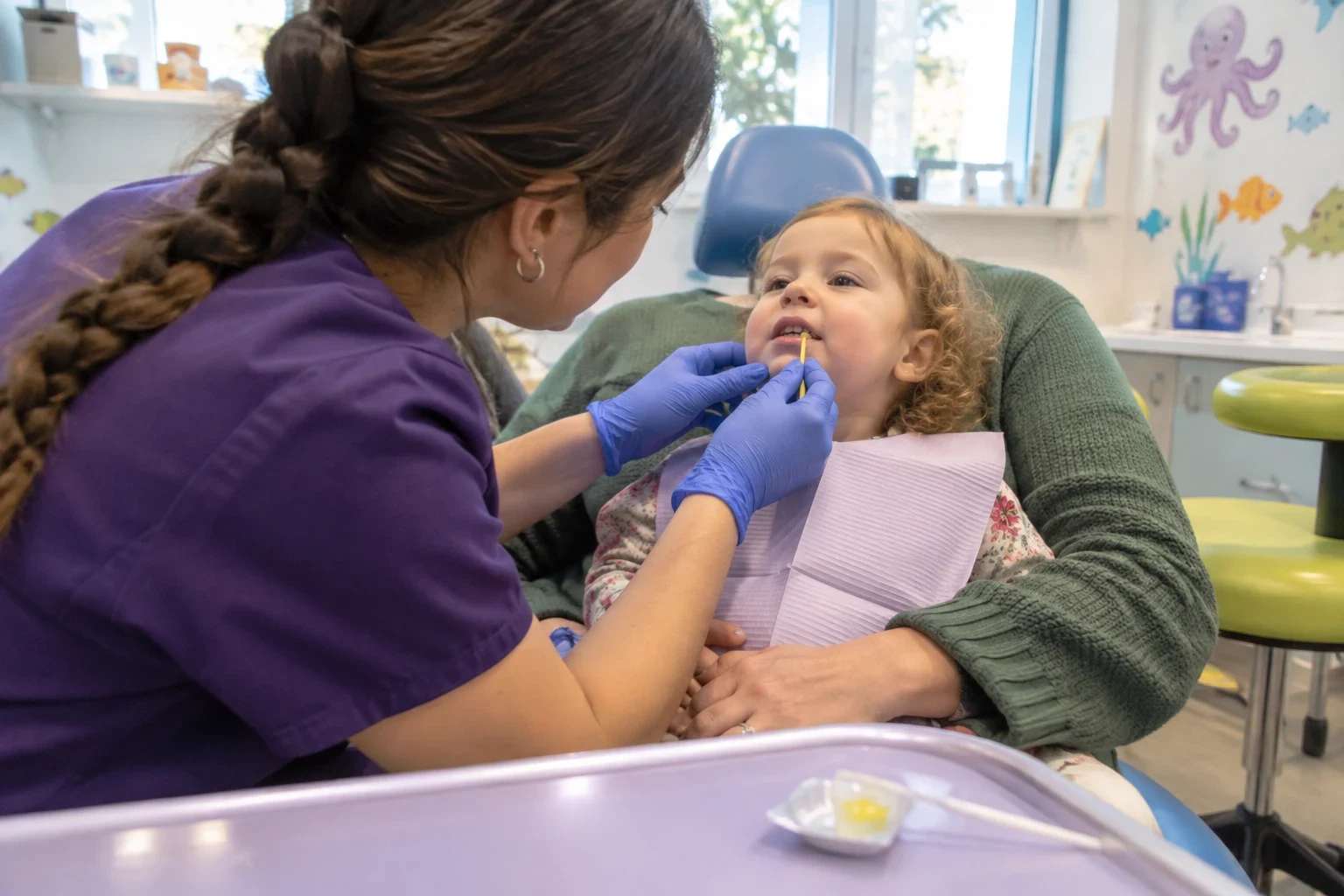
Fluoride varnish is a thin coat we paint on your child's teeth to make the enamel harder and slow down early decay. It takes about a minute, there are no needles, and most kids get it right after their cleaning.
What Fluoride Varnish Does
Baby teeth and new adult teeth have thin enamel. Acid from snacks, juice and milk pulls minerals out of it every day. Fluoride helps put those minerals back and makes the surface tougher, so small soft spots can firm up before they turn into a cavity that needs a filling.
Toothpaste gives a little fluoride twice a day. Varnish gives a stronger dose that sticks to the teeth for several hours and keeps working after your child leaves our office. Kids who snack often, wear braces later on, or already had a cavity tend to get the most out of it.
One person at our front desk handles your child's visit from the first call to the reminder for the next one. If you have questions about fluoride, how often your child needs it, or what your plan covers, that is who you talk to.
What Comes With a Fluoride Treatment
- An exam before the varnish
- Before we apply anything, we look over every tooth. Chalky white patches or early soft areas get pointed out to you, along with what they mean for your child.
- Clean, dry teeth
- Varnish holds on best when the teeth are clean, so it goes on after a cleaning or a quick wipe. We dry each section with gauze or a puff of air.
- A thin painted coat
- A tiny brush spreads a light layer over each tooth. Saliva sets it right away. Most kids get to choose a flavor.
- Simple aftercare rules
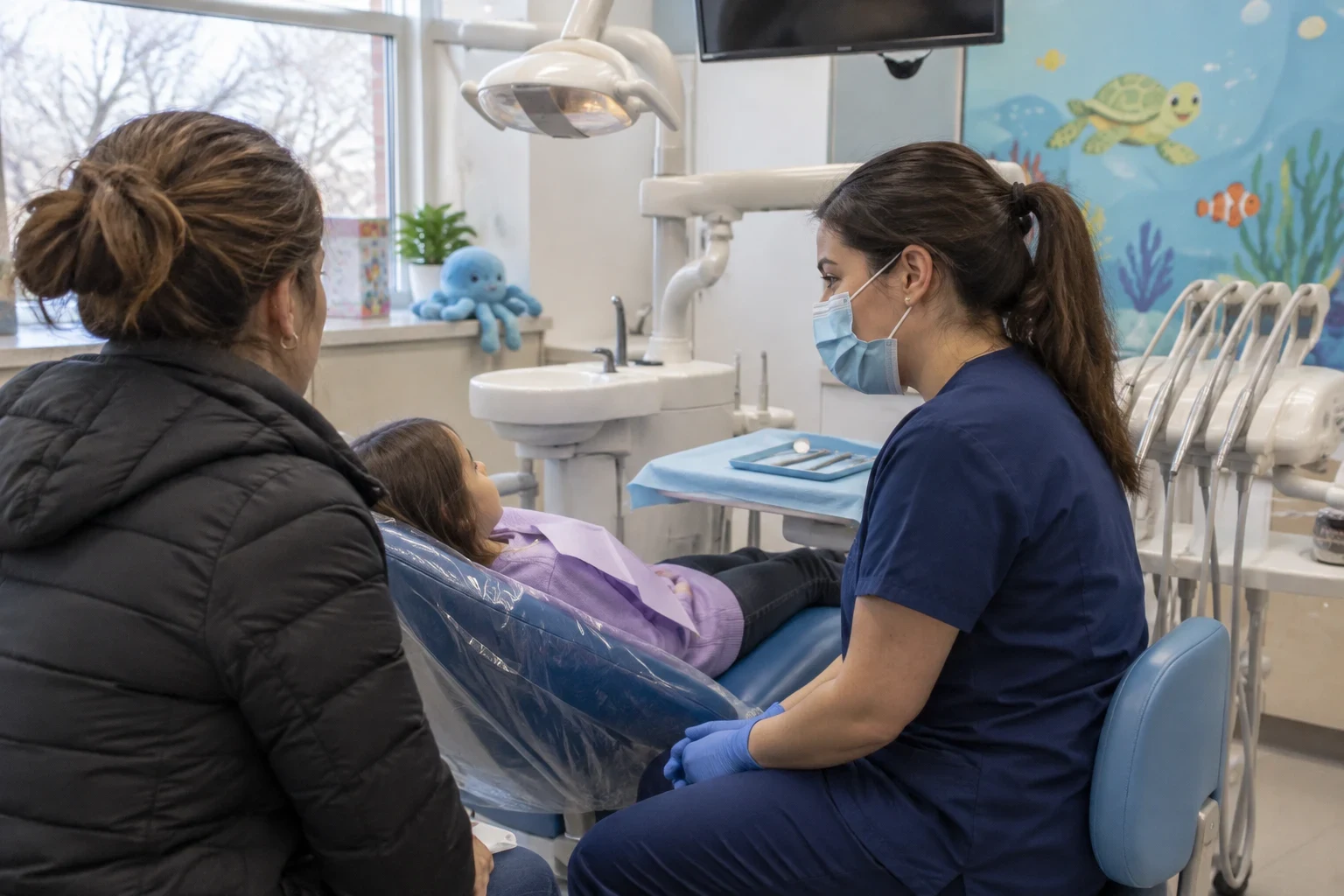
- We explain what your child can eat, what to hold off on and when brushing can start again. We walk you through it, not only your child, before you head out.
- A plan for next time
- Based on what we found, we tell you how often your child should get varnish. The front desk books the next visit so you do not need to keep track.
Signs Your Child Could Use Fluoride
White chalky spots
Dull white bands along the edge of the gums usually mean the enamel is starting to lose minerals. Fluoride can help those areas firm back up.
Cavities in the last year or two
A filling fixes one tooth, but the snacking or brushing habits behind it tend to stick around. Regular varnish lowers the odds that a second soft spot shows up.
Lots of snacking or sipping
Crackers, juice boxes and a bedtime bottle of milk keep acid on teeth for hours at a time. Varnish gives the enamel extra help.
Filtered or bottled water
Some Massachusetts towns add fluoride to the tap and some do not, and plenty of families drink filtered or bottled water either way. We can sort out how much your child is actually getting.
Brushing is a struggle
Toddlers who push the brush away and teens who hurry through it both leave spots behind. Fluoride helps cover that gap while habits get better.
What Affects the Cost
Fluoride varnish is one of the simplest steps in a child's visit, and plans often cover it for kids. Your share depends mostly on your coverage and how often your child needs it. Our front desk looks up your benefits before the visit and lets you know what to expect. For payment, our office takes Visa, Discover and MasterCard, works with most insurance plans, and offers the CareCredit Patient Payment Plan if you would rather pay over time.
Your insurance plan
Many plans pay for fluoride for children up to a certain age, a set number of times each year. We check those limits for you so nothing comes as a surprise.
How often it is applied
A child at low risk may only need varnish at the twice-a-year checkup. A child at higher risk may need it more often, and that can change how much the plan picks up.
Part of a checkup or on its own
Most families have varnish added to an exam and cleaning. A separate visit just for fluoride gets billed a different way.
How the Visit Goes
- 1
Set up the appointment
You call and reach one person who books the visit, handles new patient registration if needed and answers your questions. Most families tack fluoride onto a regular checkup.
- 2
Cleaning and exam
We clean your child's teeth and check them over. Little ones can sit on a parent's lap. Older kids take the chair by themselves.
- 3
Paint and done
The varnish goes on in about a minute. Teeth may feel a bit sticky and look slightly yellow for a few hours. That is expected.
- 4
The rest of the day
Soft foods and cool drinks are fine right away. Hold off on hot, crunchy and sticky foods for a few hours. Save brushing for the following morning, since the coating keeps feeding fluoride into the enamel overnight.
Fluoride Treatment Questions
Is fluoride varnish safe for babies and toddlers?
Yes. The amount we use is very small, and it sets on the teeth so little is swallowed. Varnish is commonly recommended once the first tooth comes in. We will talk with you about your child's age and needs before we apply it.
How often does my child need it?
Most kids get it every six months with their checkup. If your child has white spots or has had cavities, we may suggest every three months for a while. We tell you why and set the schedule with you.
Why can't my child brush right after?
The varnish keeps releasing fluoride into the enamel for several hours. Brushing too soon wipes it off before it finishes. Wait until the next morning, then brush as usual.
My child hates the dentist. Will this be hard?
It is one of the easiest parts of the visit. There is no drill, no needle and no rinsing. It takes about a minute, and many kids are surprised it is already over.
Does fluoride replace sealants?
No. They do different jobs. Fluoride strengthens all the tooth surfaces, while sealants cover the deep grooves in back teeth where brushing misses. Many kids benefit from both, and we can explain it on our Sealants page or at the visit.
Add Fluoride to Your Child's Next Checkup
One call gets your child on the schedule, and the same person can handle new patient registration and coverage questions. We see families from Winchester, Woburn, Medford and nearby towns.