ServicesRoot Canals
Root Canals for Kids in Winchester
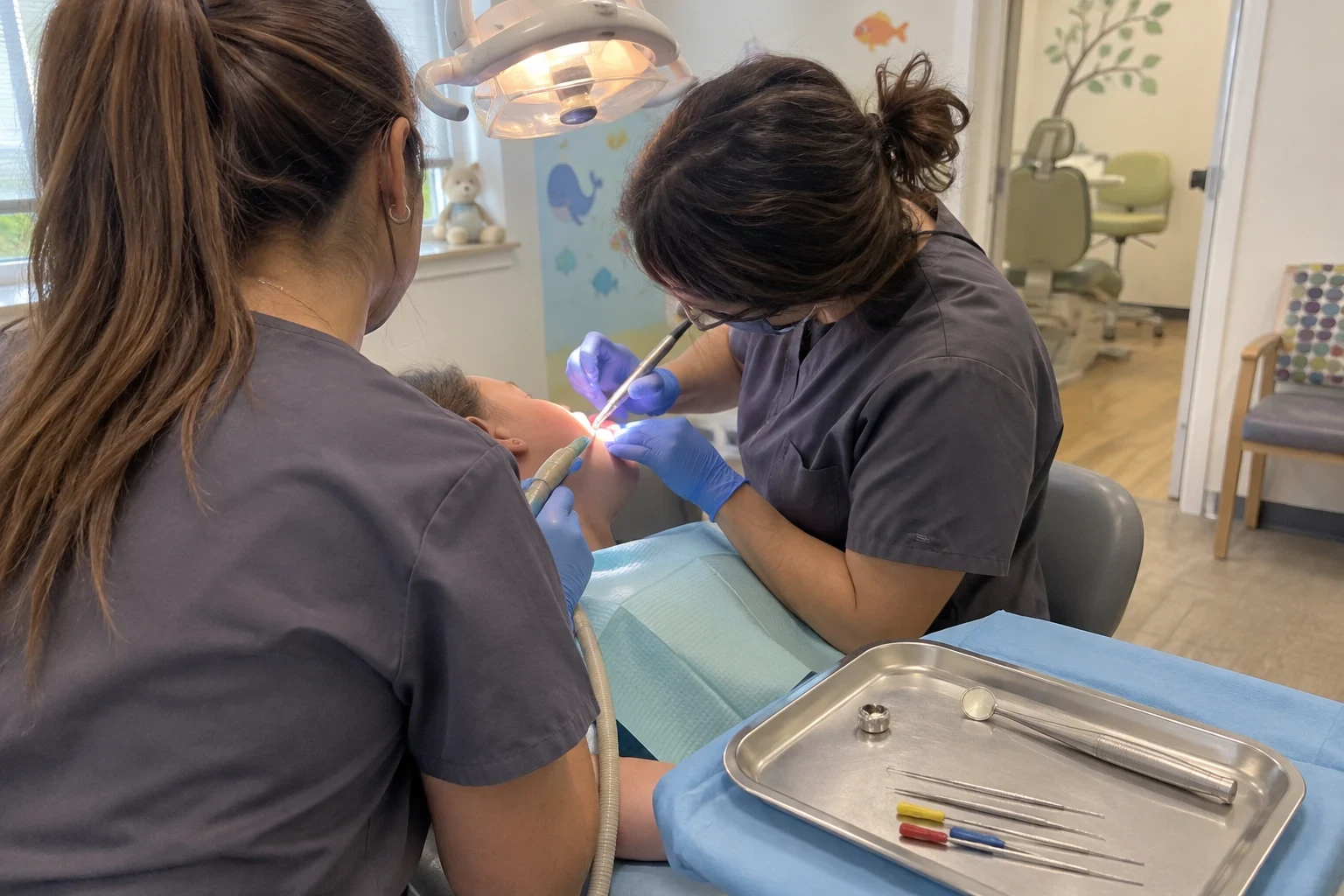
A deep cavity can reach the soft nerve inside a tooth and make it ache. We gently clean out the sore part, seal the tooth and keep it in place so your child can eat, sleep and smile comfortably again.
What a Root Canal Means for a Child
The center of each tooth holds the pulp, a soft core with the nerve and blood vessels. Once decay or a knock reaches that core, it swells or gets infected. That is when kids start to feel a throbbing ache or sensitivity that hangs on.
With baby teeth we usually do a smaller job called a pulpotomy, taking out only the damaged pulp in the top part of the tooth. When the infection has spread down into the roots, we do a pulpectomy and fill the canals with a material the body breaks down as the adult tooth arrives. Teens with permanent teeth get a regular root canal.
Keeping a baby tooth in place is worth it. It saves room for the adult tooth, lets your child chew and talk normally, and stops the teeth beside it from shifting. One person on our team handles your questions and scheduling from that first phone call through follow-up, so you always have someone to ask.
What Your Child's Treatment Covers
- An exam and X-rays
- We start by examining the sore spot and taking pictures that show whether the cavity has reached the nerve or the roots. That tells us if a pulpotomy, a pulpectomy or a full root canal is the right fit, or if the tooth cannot realistically be saved.
- Gentle numbing
- A flavored gel goes on first, then local anesthetic. Before each step, we tell your child what is coming in simple, kid-friendly words.
- Clearing out the infection
- We take out the sick tissue, rinse the tooth and disinfect it. Baby teeth get a medicated filling that is safe and built for a tooth that will come out naturally.
- A cap for strength
- With the pulp removed, the tooth breaks more easily, so most get a crown at the same visit. The stainless steel and tooth-colored choices are laid out on our Pediatric Crowns page.
- Sedation when it helps
- Very young or very anxious kids may need extra help to stay calm. Our Sedation Dentistry page lists the options, and we pick one with you that suits your child.
When a Sore Tooth Points to the Nerve
Aching at night
Pain that wakes your child, or that starts without any chewing, often means the nerve is affected.
Sensitivity that hangs on
A quick zing from ice cream is normal. Pain from hot or cold that stays for a while is worth a check.
A pimple on the gum
A small bump or puffy spot by a tooth may be an abscess. It can pop and ease up, but the infection has not cleared.
A tooth turning gray
After a fall, a tooth that darkens may have an injured nerve, even when your child says nothing hurts.
Favoring one side
Kids do not always tell you about pain. If your child chews on one side or skips certain foods, bring them in.
How the Visit Goes
- 1
The first call
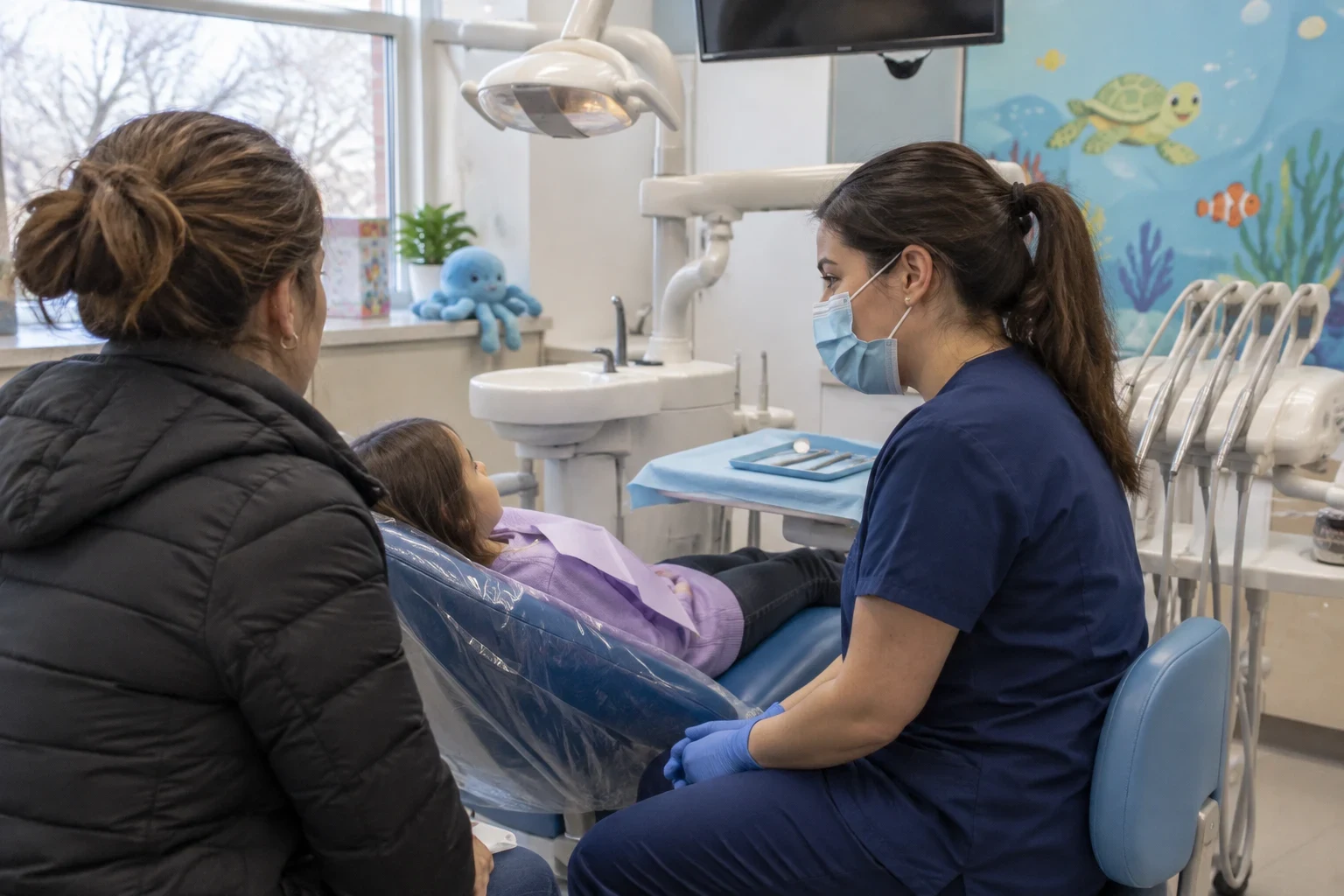
You talk with the person who will coordinate your child's care. They set up the appointment, go over insurance and answer what they can right away.
- 2
Exam and a clear plan
We check the tooth, show you the X-rays and explain what we found. You hear the options, including when a tooth is better pulled than saved, before anything starts.
- 3
Treatment day
Your child gets numbed, we treat the pulp and place a crown. Most pulpotomies on baby teeth take well under an hour, and you can stay close by.
- 4
Home care and follow-up
We tell you what to expect for the next day or two and what soft foods help. The same contact checks in and schedules the follow-up at a later exam and cleaning.
What Moves the Price of Treatment
Before any work begins, we go over the cost line by line, so the bill holds no surprises. The total mostly depends on which tooth it is and how much treatment it needs. For payment, the office accepts most insurance plans, the CareCredit Patient Payment Plan, and MasterCard, Visa or Discover.
- Which procedure fits
- Treating just the top of the nerve in a baby tooth is less work than cleaning every canal, and a permanent molar on a teen takes the most time of all.
- Crown choice
- Nearly every treated tooth gets capped afterward. Stainless steel and tooth-colored crowns carry different prices.
- Help staying relaxed
- Nitrous oxide or a deeper level of sedation adds to the visit if your child needs it.
- What your plan covers
- Benefits differ widely from one plan to the next. We help you see what your plan will likely pay before treatment starts.
Parents Ask Us About Root Canals
Something not covered here? (781) 350-9369
It's a baby tooth. Is it worth saving?
Often, yes. The baby molars in the back usually stay put until somewhere around age 10 to 12. Lose one early and the teeth next to it can tip into the gap, leaving less room for the adult tooth. Treating it also stops the pain and keeps the infection from spreading.
Will my child feel it?
We numb the area first, so most kids notice pushing, not pain. The gum can feel tender for a day or two after. A lot of kids say it feels better than before, since the sore nerve has been taken out.
What happens if the tooth is too far gone?
Now and then the damage or infection is more than a tooth can come back from. If so, we tell you straight and talk about taking it out. Our Extractions and Space Maintainers pages explain the next steps.
Does a crown always come after?
In most cases. Once the pulp is gone, the tooth cracks more easily. A crown keeps it strong until it falls out, or for many years if it is a teen's permanent tooth.
Could a filling work instead?
When the decay stops short of the nerve, a filling is usually all it takes. We confirm that with an exam and X-rays before deciding. Our Fillings page covers that option.
Get That Sore Tooth Looked At
A toothache rarely goes away on its own. Call and the person who picks up will set up a visit and stay your contact through treatment and follow-up.