ServicesPediatric Crowns
Pediatric Crowns in Winchester
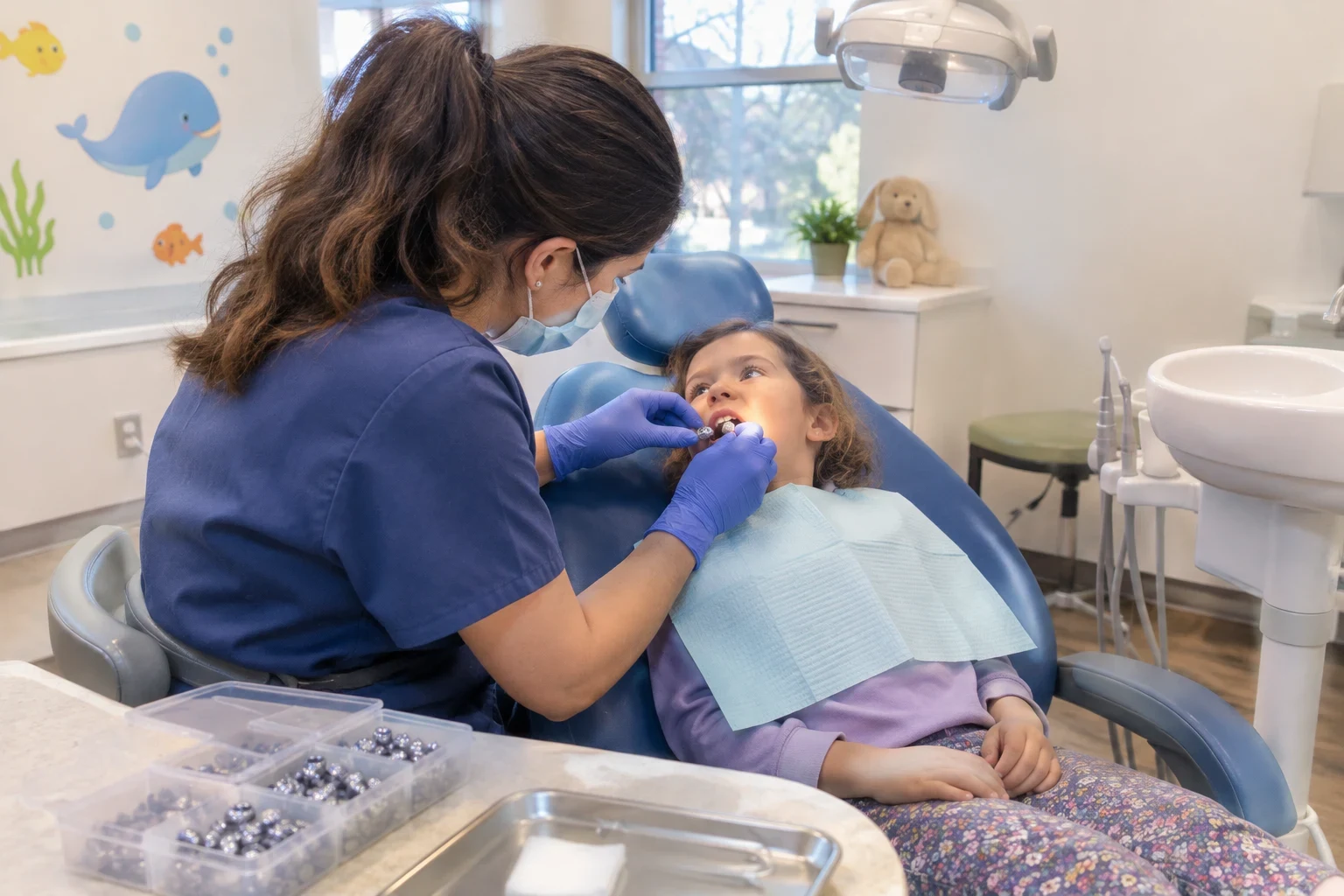
When a baby tooth has a cavity too big to fill, a small crown can cover it and keep it in place. We explain the options, help your child stay comfortable in the chair, and one person on our team handles your questions from the first call on.
What a Pediatric Crown Does
A pediatric crown is a cap that fits over a whole baby tooth. It goes on when decay or a break has taken out so much of the tooth that a filling would not hold. The crown takes the chewing force, seals out new decay and keeps the tooth in place.
Many parents ask why we would fix a tooth that is going to fall out. Back baby molars often stay until age 10 to 12. They hold space for the adult teeth underneath. They also help your child chew and speak. Losing one early can let nearby teeth drift, and then the adult tooth may come in crooked.
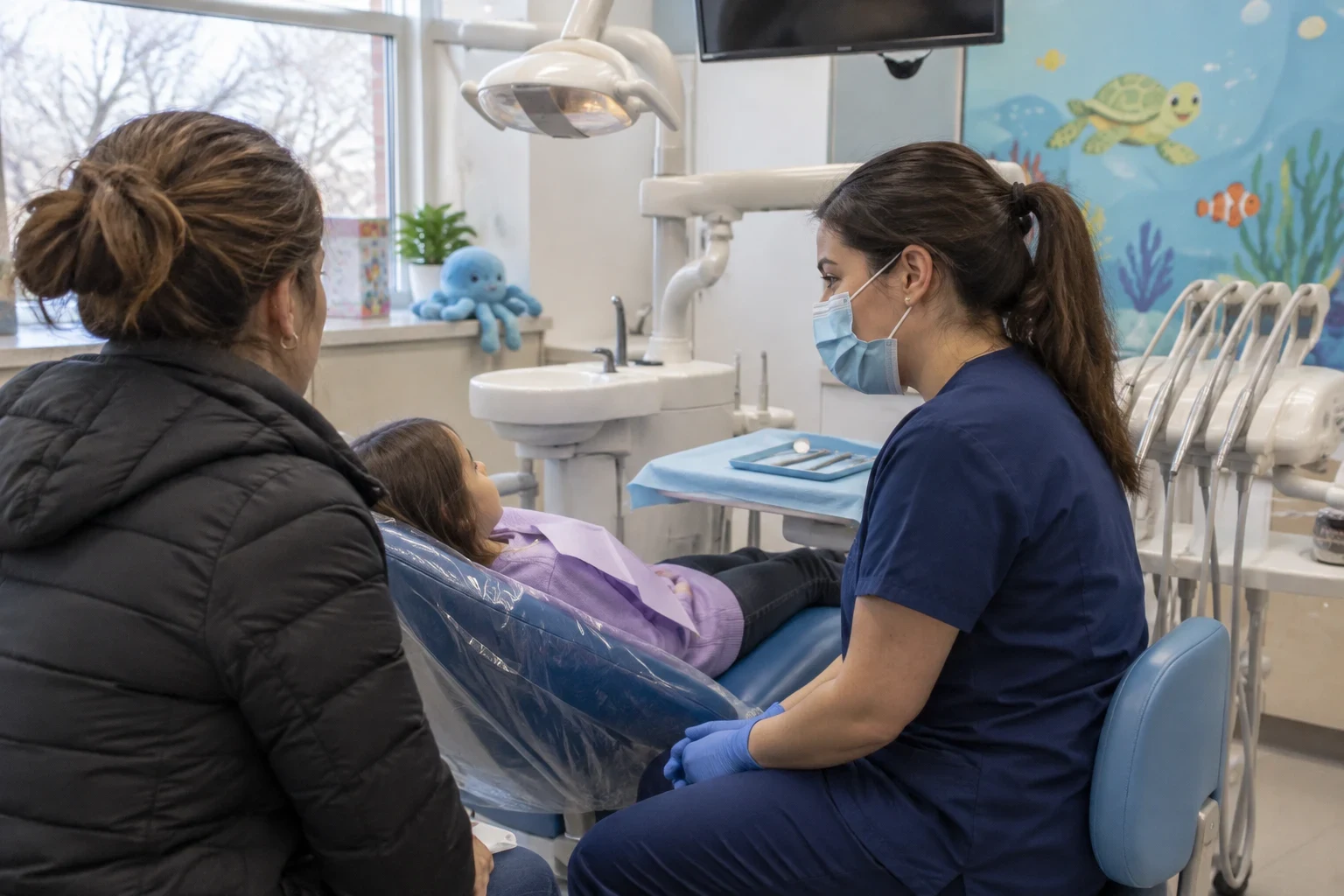
We keep one person as your contact for the whole job. That person goes over the plan, books the visit and checks in afterward. You do not have to repeat your child's story to a new face each time.
What the Crown Visit Includes
- A look and X-rays first
- We check how deep the decay goes and whether it has reached the nerve. That tells us if a crown is enough or if the tooth needs care inside first.
- An honest choice of material
- Stainless steel crowns are the most common for back baby teeth. They are tough, need little trimming and usually go on in one visit. Tooth-colored zirconia crowns look like a natural tooth, but they need more trimming and a very dry tooth to place. We tell you which fits your child's tooth and why.
- Nerve treatment when needed
- If decay has reached the soft center, we clear out the infected part before the crown is placed. You can read more about this step for young teeth on our Root Canals page.
- Keeping your child at ease
- Before we start, the tooth gets a gentle numbing, and we tell your child what is happening in words a kid can follow. If your child is very nervous, or several teeth need work, we can talk with you about Sedation Dentistry.
- Care tips to take with you
- Before you leave, we go over what to eat, how to brush around the crown and what is normal for the next day or two.
Signs Your Child May Need a Crown
A large cavity on a back molar
When decay spreads across more than one side of a baby molar, a filling often breaks or leaks. A crown covers the whole tooth instead.
A cracked or broken tooth
Falls and hard foods can chip off a corner of a tooth. If too much is missing, a crown protects what is left.
Weak or chalky enamel
Some kids are born with thin or soft enamel that wears down fast and gets cavities easily. Crowns can shield those teeth.
Pain when chewing
If your child avoids one side or complains when eating something cold or sweet, the tooth may be badly decayed. We will look and tell you plainly what we find.
A tooth that needed nerve treatment
After the inside of a baby molar is treated, the tooth is weaker. A crown is usually the next step.
What Affects the Cost of a Crown
We go over the cost with you before any work starts, so the bill holds no surprises. We accept MasterCard, Visa, Discover, most insurance plans and CareCredit Patient Payment Plan. Your contact can look at your coverage ahead of time and tell you what your plan will likely pay.
Number of teeth
A single crown makes for a short visit. If several teeth need one, we may place them all at once or spread them over a few appointments, and the total shifts with that choice.
Crown material
Silver-colored metal crowns cost less, and insurance covers them more often. White zirconia crowns cost more, and many plans pay only part of that price.
Treatment inside the tooth
Sometimes decay has reached the nerve. Cleaning that out comes first as a separate step, and it is billed on its own.
Sedation for the visit
Some kids need sedation to stay calm and safe in the chair. It adds to the cost, so we talk it over with you before it goes into the plan.
How Crown Day Goes
- 1
We talk it through by phone
Your contact goes over the plan, answers questions about the crown and insurance, and sets a time that works for your family. If your child is new to us, we handle new patient registration on the same call.
- 2
Getting comfortable
Your child settles into the chair, and we explain what they will feel using simple words. Then we numb the tooth and wait until it is fully asleep before we start.
- 3
Shaping and fitting
We remove the decay and shape the tooth just enough for the crown. We try the crown on, check the bite and adjust it. Then we cement it in place.
- 4
Home with care notes
Most single crowns take well under an hour. Your child's lip and cheek stay numb for a few hours, so watch for chewing or biting on them. Soft foods are best that day.
- 5
A quick follow-up
Your contact checks in after the visit to see how your child is doing. We look at the crown again at the next checkup.
Questions Parents Ask About Crowns
Will the crown fall out?
A crown is cemented on, and it usually stays until the baby tooth falls out on its own. Sticky candy like taffy or caramels can sometimes pull a steel crown loose. If one ever comes off, keep it and call us so we can check the tooth and put it back on.
Does getting a crown hurt?
We numb the tooth well first, so your child should feel pressure but not pain. The gums can be a little sore for a day or two afterward. Children's pain medicine, if your pediatrician says it is fine, usually takes care of it.
Is a silver crown safe?
Yes. Stainless steel crowns have been used on baby teeth for decades. They do not contain mercury. They fall out with the baby tooth when the adult tooth comes in.
Why not just pull the tooth?
Pulling a back baby tooth early can let other teeth shift into the gap. Then you may need a space maintainer to hold room for the adult tooth. Keeping the tooth with a crown is often simpler, and we will tell you honestly which makes more sense.
Can a front tooth get a crown too?
Yes. Front baby teeth damaged by decay or a fall can get a tooth-colored crown. We will look at how much tooth is left and talk with you about what will hold up best.
Talk With Us About Your Child's Tooth
Tell us what you are seeing, and one person will walk you through the next step. We see families from Winchester, Woburn, Arlington and nearby towns.